
Syracuse and the surrounding New York area
Water Heater Repair and Replacement in Onondaga County
Decide whether the heater in your basement is worth repairing or has reached the end, and understand what a compliant replacement includes in this county.
Water Heaters quote
The quote worth having names the expansion tank, the relief discharge and the permit, not just the tank. Tell us what the heater is doing and whether you have hot water right now, and we will put you in front of licensed, insured contractors who check the service before they price it.
Would you rather talk it through? Call (315) 640-3590, answered 24/7.
$100 off your first job
Credited by us on your first booked job.
- One credit per customer per property, on your first booked job.
- Valid through December 31, 2026.
Mention this offer when you book. Full terms.
The tank, the checklist, and the water going into it
Water heater work is the highest volume job in this trade and, in Onondaga County, it is a permitted one. Plumbing Control requires a permit before a new water heater is installed, and the application carries a residential checklist that has to be completed and submitted with it. The checklist is unusually specific and it is public, so you can hold your own installation against it afterward: a full port valve on the cold inlet, a temperature and pressure relief valve with the discharge tube piped to within 6 inches of the floor, not reduced in size and with no exposed threaded end, a drain valve, metal hot and cold connections, the thermostat set to 120 degrees, and a thermal expansion tank wherever a pressure reducing valve is present on the service. That last item is the one quotes leave out. The other half of the story is the water: moderately hard across this metro, which is what scales an element and shortens a tank's life.
- Gas tank replacement, like for like or resized to the household
- Electric tank replacement, which is the common case in towns where a large share of homes heat with electricity
- Tankless installation, and the gas supply, venting and clearance questions it raises
- Thermal expansion tank fitted where a pressure reducing valve is present on the service
- Temperature and pressure relief valve, with the discharge tube piped to within 6 inches of the floor
- Full port cold inlet valve, tank drain valve and metal hot and cold connections
- Vacuum relief valve on bottom fed tanks, or as the manufacturer instructs
- Thermostat set and photographed at 120 degrees
- Dip tube replacement where white granules are reaching the aerators and shower heads
- Annual flush and anode rod check, which moderately hard water here earns
- Scale work on tankless heat exchangers
- Oil fired and propane fired heaters, which are ordinary in towns with no gas line
What changes a water heater job here
A tank is a tank until you look at what it connects to. Four things move this job locally: the permit, the pressure on the service, the water going through it, and what your house burns.
It is permitted work, which surprises most people
Onondaga County Plumbing Control states that a plumbing permit is required prior to the installation of a new water heater, and gives its reasoning plainly: incorrect connections, venting or clearance can cause electrical shock or fire, and a small error on a gas heater can cause a poisonous leak or an explosion. Permits are a published fee schedule adopted by the county legislature with a set number of inspection visits attached, so the permit line on a quote is checkable rather than something to take on trust. A heater swapped in without one is an unpermitted alteration on your property, and that surfaces at resale or on a claim.
Whether your service has a pressure reducing valve
This single item separates a compliant quote from a cheap one. The county's water heater checklist requires a thermal expansion tank, properly installed and secured, wherever a pressure reducing valve or a reduced pressure zone device is present, and requires a photograph of the water service to prove it. Many houses in this metro have a PRV, because section 5.4.H of the county requirements makes one mandatory in OCWA territory where line pressure exceeds 80 psi. A quote with no expansion tank on a house with a PRV has either missed a code item or has not looked at the service.
How hard the water is where you live
Hardness decides how fast an element or a heat exchanger scales, and it changes across the metro. The City of Syracuse reports total hardness of 127 milligrams per liter from Skaneateles Lake, about 7.4 grains per gallon. OCWA reports a range of 115 to 190 parts per million, about 6 to 11 grains, and describes its water as moderately hard. That is enough to make an annual flush and an anode rod check worth the visit, and not enough to make a softener a health purchase, which OCWA says itself.
Which lake, or which well, reaches your tap
Source changes the mineral load, and in this county it changes by municipality and sometimes within one. OCWA lists Camillus, Marcellus and Skaneateles towns on Otisco Lake; Cicero, Clay, Salina and Van Buren on Otisco or Lake Ontario; DeWitt and Geddes on any of three sources; Manlius on Lake Ontario or the Skyridge wells; and Fayetteville village on Lake Ontario alone. Baldwinsville runs its own groundwater system from four wells. Groundwater carries a different iron and mineral profile from lake water, so a scaling or staining complaint there does not mean what the same complaint means two towns over.
What the house burns
Electric tanks fail differently from gas, are worked on differently, and are more common here than the national picture suggests. Some 41.4 percent of Solvay households heat with electricity, the highest share in the metro, and 32.7 percent in Baldwinsville village. At the other end, 20.3 percent of town of Skaneateles households heat with fuel oil or bottled gas, and roughly one household in eleven in Marcellus heats without natural gas, so oil fired and propane fired heaters are ordinary rather than exotic in those towns.
Where the tank sits and what it has to come through
The old tank has to leave and the new one has to arrive, and in a 1900s city house that can mean a narrow cellar stair and a turn at the bottom. Venting, combustion air and clearance are decided by the room, not by the appliance, and the checklist asks for metal connections, a drain valve reachable enough to use, and a relief discharge that terminates within 6 inches of the floor. A tight mechanical room is a real cost and it is visible before anyone quotes.
How old the one you have is
Age tells you whether you are choosing between repair and replacement or only between models. OCWA notes that heaters manufactured between 1993 and 1996 are the ones most likely shedding a plastic dip tube into the hot water, and describes such a heater as being at roughly triple its expected life. The 1970s tract housing in Clay and Manlius, both around a 1972 to 1978 median build year, is now on its second or third heater, and the fittings around the tank are usually the same age as the house rather than the age of the heater.
Repair it, or replace it?
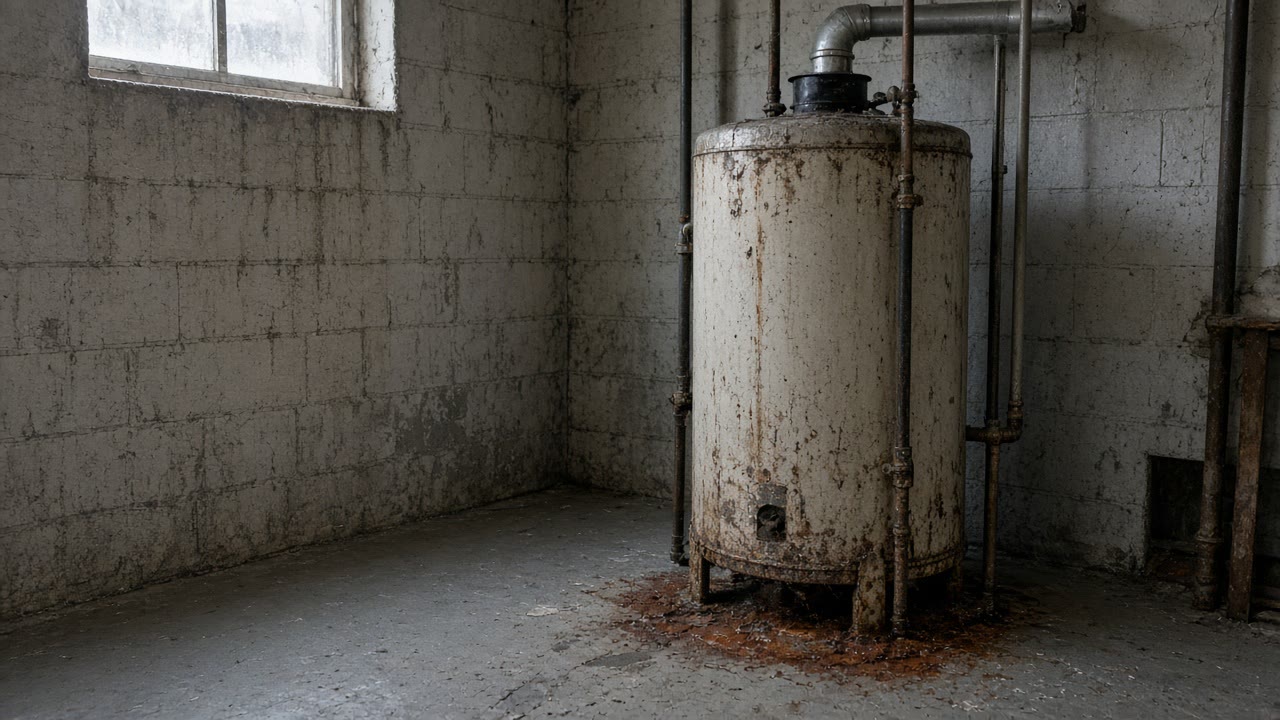
Age, the dip tube and how the water tastes usually settle that before anyone opens a catalog.
How a heater replacement is done properly
Work out whether it is the heater or the water
No hot water on an electric tank is often a thermostat or an element. Rusty hot water after a main break may be sediment drawn in from the street, and OCWA's advice is to clear that from the cold side, never by running the hot first, which pulls it into the tank. White granules in aerators are a dip tube. A rumbling tank that still heats is usually scale. Each of those is a repair, and none of them is a reason to buy a tank.
Look at the service before pricing the appliance
The presence of a pressure reducing valve changes what a compliant installation includes, and the county requires a photograph of the water service with the permit application to show it. Checking static pressure at the same time is worth doing: above 80 psi in OCWA territory a PRV is required on the inlet side of the meter, and if there is one the expansion tank is not optional.
The permit goes in before the work, not after
Plumbing Control requires the permit prior to installation and the residential water heater checklist completed and submitted with the application. Only a holder of a county Certificate of Competency may obtain a contractor permit, and a homeowner doing their own work applies in person under the separate homeowner permit conditions.
Size, fuel and location settled, then the old tank goes
Draining and removing the old tank is the first physical step and the one that finds surprises: a seized drain valve, a shutoff above the heater that will not close, corroded unions. The county requires a full port valve on the cold water inlet of the new installation, which is partly why the next replacement is easier than this one.
Set, connect and vent to the checklist
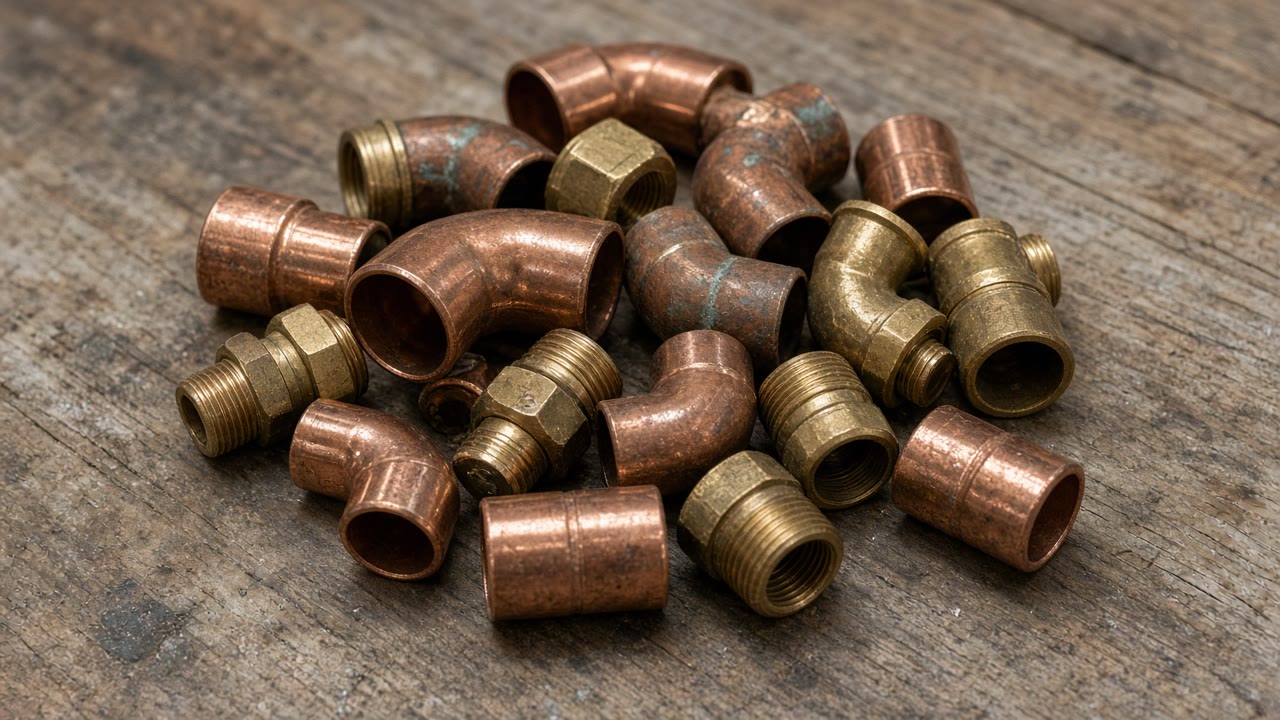
Metal hot and cold connections, a drain valve on the tank, a vacuum relief valve on a bottom fed tank or as the manufacturer instructs, and the temperature and pressure relief valve with its discharge tube piped to within 6 inches of the floor, not reduced in size, with no exposed threaded end. Every one of those is a line on a public checklist rather than a matter of style.
The photographs
The checklist is a photographic document, revised June 2026, and it is submitted with the application. That is unusual and it is useful to you: the evidence of what was installed exists on a county file rather than only in a receipt, and the same list is what you can walk down from the basement floor after the installer has gone.
Inspection, and the thermostat left at 120
The county checklist asks for the thermostat set at 120 degrees. It is also the setting the city's own lead guidance implies, since lead dissolves more easily into hot water. A thermostat left at 140 is a scald risk, an energy cost and a checklist item all at once, and it is one of the few things on the list you can verify yourself in ten seconds.
First year, flush it
At 6 to 11 grains per gallon across OCWA's range and 7.4 in the city supply, sediment collects. An annual flush and an anode rod check is the cheap half of the repair or replace decision, and it is the maintenance most likely to be skipped because nothing appears to be wrong.
What water heaters looks like

What comes with the heater, and what does not
When you may not need this at all
- No hot water on an electric tank is frequently a thermostat or a heating element rather than a failed tank, and that is a repair on a heater you already own.
- White particles that look like powdered soap point at the dip tube, an affordable and easy to install part, and OCWA reports that manufacturers consider the underlying problem solved. It is a strong cue about age, though: it is most likely in heaters built between 1993 and 1996, which are at roughly triple their expected life.
- Rusty hot water straight after a main break is often the street rather than the tank. Run one cold tap for 10 to 15 minutes with the aerator removed, and do not run the hot first, because that pulls the sediment into the heater where it settles and stays.
- A tank that rumbles but still heats usually wants flushing rather than replacing. At 127 milligrams per liter in the city supply and 115 to 190 across OCWA's range this is scaling territory, and a flush with an anode rod check costs a fraction of a tank.
- A softener is a comfort purchase here, not a necessity, and OCWA says so itself: softening does not improve the sanitary quality of water. In Baldwinsville there is a further reason to pause, since one village well already records sodium at 30.1 milligrams per liter and a softener adds more.
- A relief valve that weeps on every heating cycle is not always a failed heater. Where the service has a pressure reducing valve and no expansion tank was ever fitted, the pressure has nowhere to go as the water warms, and the missing tank is the fault rather than the valve.
What is out of scope
- Boilers, furnaces and space heating. Hydronic heat is a different trade even where it shares a room with the hot water.
- Gas service, gas meters and anything upstream of the appliance connection, which belongs to the utility.
- Electrical circuit, breaker and panel work for an electric or heat pump heater beyond the appliance connection itself, which is an electrician's job.
- Solar thermal collectors and their roof mounting.
- Water softeners, filters and treatment equipment.
- Manufacturer warranty claims and parts negotiations, which sit between you and the brand.
- Drain and waste connections at a floor drain, which is a different system and is arranged separately.
Where water heater work is arranged
- Water Heaters in Syracuse
- Water Heaters in Solvay
- Water Heaters in East Syracuse
- Water Heaters in Salina
- Water Heaters in Liverpool
- Water Heaters in North Syracuse
- Water Heaters in Camillus
- Water Heaters in Clay
- Water Heaters in Cicero
- Water Heaters in DeWitt
- Water Heaters in Manlius
- Water Heaters in Fayetteville
- Water Heaters in Baldwinsville
- Water Heaters in Marcellus
- Water Heaters in Skaneateles
- Water Heaters in Jamesville
What people ask about replacing a water heater
Do I really need a permit just to swap a water heater?
In Onondaga County, yes. Plumbing Control states that a plumbing permit is required prior to the installation of a new water heater, and the county gives its reasons: incorrect connections, venting or clearance can cause electrical shock or fire, and a small error on a gas heater can cause a poisonous leak or an explosion. It is one of the few places where the highest volume job in the trade is a permitted job, and most national marketing does not mention it because in many places it is not true.
What is actually on the county checklist?
The residential water heater permit checklist, revised June 2026, is completed and submitted with the application, and it requires a full port valve on the cold water inlet, a temperature and pressure relief valve with the discharge tube piped to within 6 inches of the floor, not reduced in size and with no exposed threaded end, a drain valve on the tank, metal hot and cold lines, a vacuum relief valve on bottom fed tanks, a thermostat set to 120 degrees, and a thermal expansion tank wherever a pressure reducing valve is present. You can stand in your basement and check most of it yourself.
Why does one quote include an expansion tank and another does not?
Because one of them looked at your water service. The county requires a thermal expansion tank wherever a pressure reducing valve or a reduced pressure zone device is present, and requires a photograph of the service to show it. A PRV is required in OCWA territory wherever line pressure exceeds 80 psi, so plenty of houses here have one. If the cheaper quote has no expansion tank, ask whether the installer has seen your service or is pricing a generic swap.
How long should a water heater last in Syracuse water?
Nobody can give you a number for your tank, and anyone who does is guessing. What is published locally is the direction of travel: OCWA describes water heaters manufactured between 1993 and 1996 as being at roughly triple their expected life, and rates the water as moderately hard at 6 to 11 grains per gallon, with the city supply at about 7.4. Hardness in that range scales an element and lays sediment in the bottom of a tank, which is why an annual flush and an anode rod check change the answer more than the brand does.
Can I install a water heater myself?
A homeowner can take out their own plumbing permit in Onondaga County for an owner occupied single family dwelling, applying in person with proof of ownership, the state WC/DB-100 affidavit and plans, and only the individual homeowner may install the permitted work. What you cannot do is skip the permit, or have a handyman work under it, since the county treats obtaining a permit on behalf of another party as an offense in its own right. The inspection also has to happen before anything is concealed.
Tank or tankless?
The local arguments are hardness, fuel and venting rather than brochure efficiency. Moderately hard water scales a tankless heat exchanger just as it scales an element, so a tankless unit here comes with a descaling routine rather than without maintenance. Gas capacity and venting decide whether it is even straightforward, and in towns where a fifth of homes have no gas line at all, as in the town of Skaneateles, the question often answers itself.
Tell us what the heater is doing
No hot water, not enough of it, rumbling, or water on the floor. Each one means something different.