
Repiping in East Syracuse, the Metro's Joint Oldest Village
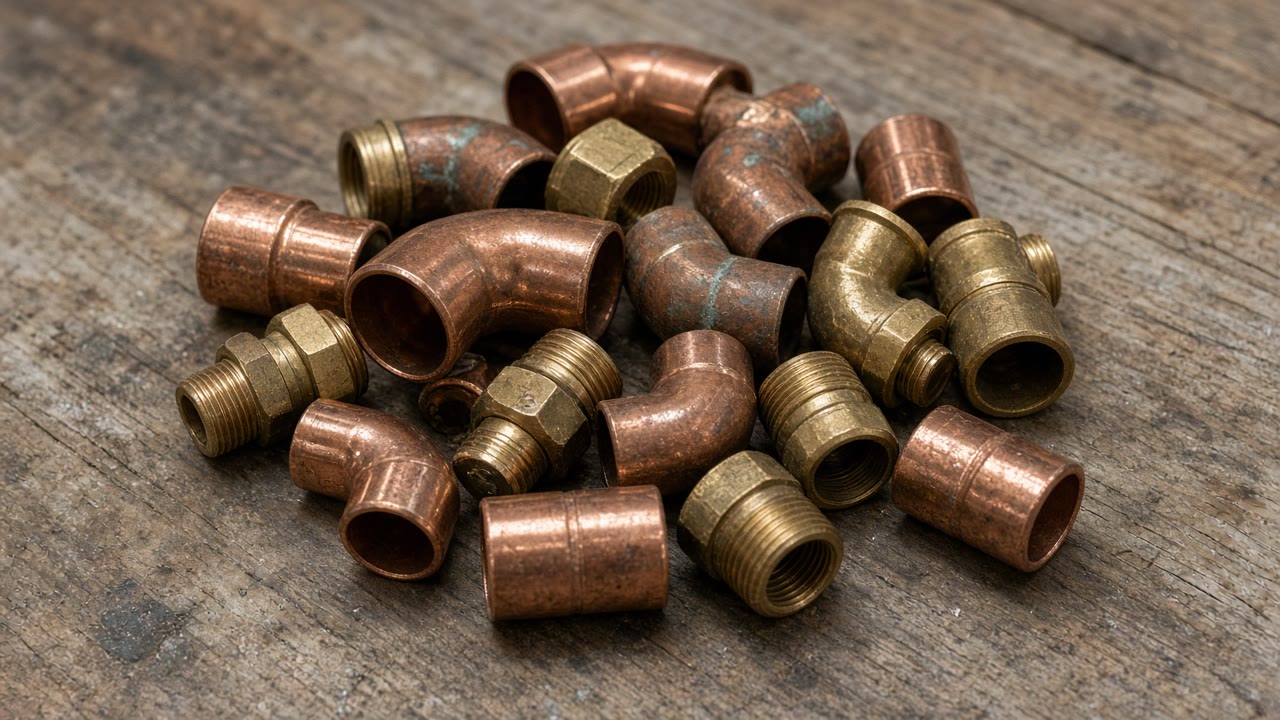
A 1938 median build year means the solder at the joints and the brass in the fittings were installed decades before the rules that govern them today.
Repiping quote in East Syracuse
Share a few details so we can confirm coverage and arrange the right next step.
Would you rather talk it through? Call (315) 640-3590, answered 24/7.
$100 off your first job
Credited by us on your first booked job.
- One credit per customer per property, on your first booked job.
- Valid through December 31, 2026.
Mention this offer when you book. Full terms.
The village age profile behind an East Syracuse repipe
American Community Survey 2020 to 2024 five year estimates give the Village of East Syracuse a median year of construction of 1938, the joint oldest in the Syracuse metro alongside Liverpool and Skaneateles villages. Of 1,464 housing units, 791, or 54.0 percent, were built in 1939 or earlier, 62.1 percent before 1950, and 1,314, or 89.8 percent, before 1980.
Source: US Census Bureau, accessed 2026-09-13
EPA states that the Safe Drinking Water Act reduced the maximum allowable lead content that may be called lead free to a weighted average of 0.25 percent across the wetted surfaces of pipes, pipe fittings, plumbing fittings and fixtures, and 0.2 percent for solder and flux, and that lead pipes are more likely to be found in older cities and in homes built before 1986. Among homes without a lead service line, EPA says the most common problem is brass or chrome plated brass faucets and plumbing with lead solder.
Source: US Environmental Protection Agency, accessed 2026-09-13
Section 305.4 of the Plumbing Code of New York State, headed Freezing, states that water, soil and waste pipes shall not be installed outside a building, in attics or crawl spaces, concealed in outside walls, or in any other place subject to freezing temperatures unless adequate provision is made to protect them by insulation or heat or both, and that exterior water supply system piping shall be installed not less than 6 inches below the frost line and not less than 12 inches below grade.
Source: UpCodes, publishing the Plumbing Code of New York State 2020, accessed 2026-09-13
Section 5.5.B of the Onondaga County Requirements for Implementation states that all newly installed lines carrying potable water, and parts of existing systems that have been altered, extended or repaired, shall be disinfected before use. Section 5.5.H requires that where a water service is removed or relocated, the former pipe or sleeve is capped at the inside and outside walls and any openings grouted full, and 5.5.I requires a discontinued service to be exposed at the curb stop, disconnected, capped at the valve outlet and inspected by the water purveyor.
Source: Onondaga County Examining Board for Plumbers, accessed 2026-09-13
The New York State Lead Service Line Inventory records 1,133 service lines under the locality Village of East Syracuse: 72 lead, 43 galvanized requiring replacement, 105 non lead and 913 unknown. Every one of the 72 lead records is lead on the customer side, and in 31 of them the public side is already copper. A separate locality, E Syracuse, covering the wider 13057 area, holds 3,847 records with 451 non lead and 3,396 unknown and no confirmed lead or galvanized lines at all.
Source: New York State Department of Health, accessed 2026-09-13
What a 1938 median says about the pipe behind the plaster
East Syracuse village shares the oldest median year of construction in this metro at 1938, with 54.0 percent of its 1,464 housing units built in 1939 or earlier and 89.8 percent before 1980. That is the single most useful number for deciding whether interior supply pipe is the problem, because a house of that age was plumbed in galvanized steel as standard and its copper, where copper exists, was almost certainly jointed with lead solder long before the 1986 restriction.
Repipe the house, or test the water first
These are genuinely different answers and the evidence separates them. Falling flow at the furthest fixture with sound pressure at the hose bib is a rusted bore, and that is a pipe replacement. Sound flow with a lead concern is not: the pipe may be fine while the joints are the issue, and lead free has never meant zero, it means a weighted average of 0.25 percent across the wetted surfaces and 0.2 percent for solder and flux. In the second case a water test tells you more than opening a wall does, and it costs a fraction as much.
Age is the evidence, not a sales line
More than half this village was built in 1939 or earlier. That is why the assumption here starts with original galvanized runs and pre 1986 joints, and why the same assumption would be wrong two towns north where the housing is thirty years newer.
Keep new pipe out of the cold
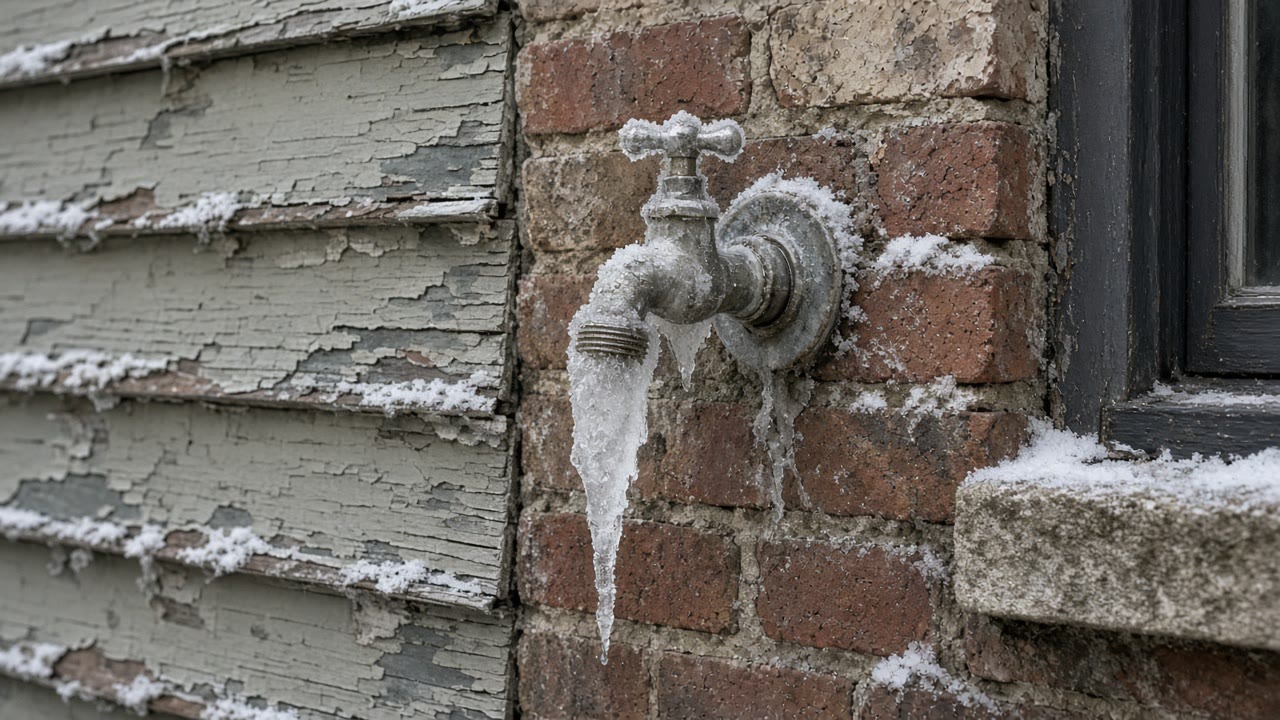
Section 305.4 of the Plumbing Code of New York State says water pipes shall not run outside a building, in attics or crawl spaces, concealed in outside walls, or anywhere subject to freezing unless protected. Rerouting a run out of an exterior wall is often the most valuable part of a repipe, even though nothing about it shows afterward.
Disinfection is a real step and rarely quoted
The county requires all newly installed potable lines, and any part of an existing system that has been altered, extended or repaired, to be disinfected before use. It is short, it is cheap and it is a fair thing to ask about when two prices look identical.
A repipe, or a water test?
Those are different answers to different problems. Tell us what the water is doing and we will say which one fits.
Other work we arrange in East Syracuse
Repiping questions from East Syracuse owners
Is copper pipe in an old village house safe, or does it need replacing too?
Usually the copper itself is fine and the question is the joints. In a village where 54.0 percent of homes went up in 1939 or earlier, any copper was almost certainly installed before the 1986 rules, and solder from that era can carry lead even when the pipe is sound. EPA's threshold for calling a fitting lead free is a weighted average of 0.25 percent across the wetted surfaces, and 0.2 percent for solder and flux, so lead free is a legal limit rather than an absence. A water test is the cheaper way to settle it.
Can I do part of the house now and the rest later?
Yes, and in a house of this age that is often the sensible order. The original horizontal main in the cellar is usually what closed up first, so replacing it and the risers to the worst bathroom deals with most of the complaint. Branches that were redone in a later remodel are already copper and do not need doing twice. What is worth avoiding is opening the same wall in two separate years, so plan the sequence before the first section rather than after it.
Tell us what the pipe is doing in your village house
Flow that faded, rusty water in the morning, or a lead worry you want settled. No obligation either way.