
Faucets, Toilets and Shutoff Valves in East Syracuse
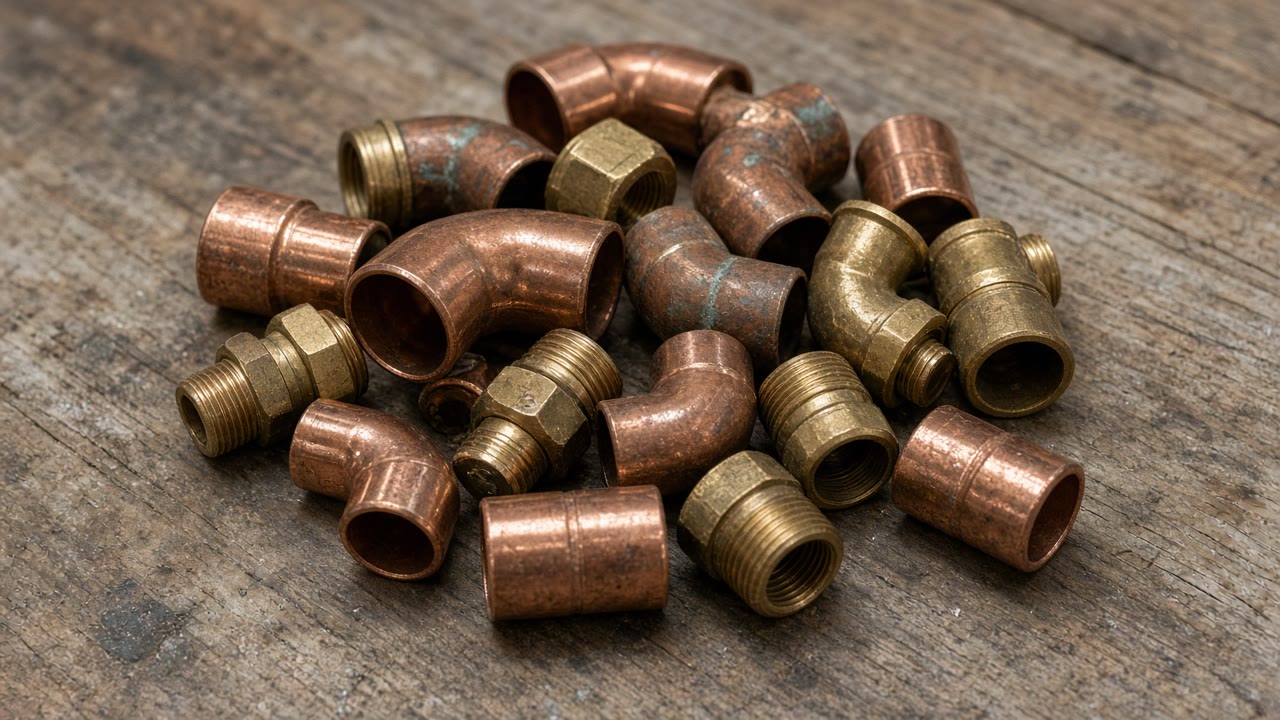
The brass behind an escutcheon in a 1930s village house predates every rule that now governs what a fitting may contain.
Fixtures and Valves quote in East Syracuse
Share a few details so we can confirm coverage and arrange the right next step.
Would you rather talk it through? Call (315) 640-3590, answered 24/7.
$100 off your first job
Credited by us on your first booked job.
- One credit per customer per property, on your first booked job.
- Valid through December 31, 2026.
Mention this offer when you book. Full terms.
Village age, and who owns the valve under your sink
American Community Survey 2020 to 2024 five year estimates give the Village of East Syracuse a median year of construction of 1938, the joint oldest in the Syracuse metro alongside Liverpool and Skaneateles villages. Of 1,464 housing units, 791, or 54.0 percent, were built in 1939 or earlier, 62.1 percent before 1950, and 1,314, or 89.8 percent, before 1980.
Source: US Census Bureau, accessed 2026-09-13
EPA states that the Safe Drinking Water Act reduced the maximum allowable lead content that may be called lead free to a weighted average of 0.25 percent across the wetted surfaces of pipes, pipe fittings, plumbing fittings and fixtures, and 0.2 percent for solder and flux, and that lead pipes are more likely to be found in older cities and in homes built before 1986. Among homes without a lead service line, EPA says the most common problem is brass or chrome plated brass faucets and plumbing with lead solder.
Source: US Environmental Protection Agency, accessed 2026-09-13
Asked whether it will replace a leaking shutoff valve, OCWA answers that it owns only the water meter and the remote reader at a property, that all the plumbing and piping including the shutoff valves belong to the owner, and that a customer getting ready to make a repair can call the OCWA office to have the water shut off at the road while the work is done. Asked who to call when the water lines to a house need replacing, OCWA answers that the property owner is responsible for all lines from the house to the road.
Source: Onondaga County Water Authority, accessed 2026-09-13
OCWA Customer Rules section 4.5 requires the customer, at the customer's own expense, to install two shutoff valves: the first inside the building wall no further than 12 inches from that wall, and the second adjacent to and on the outlet side of the meter. Both must be of a make and type approved by the Authority. Section 5.4 adds that the customer is responsible for maintaining the plumbing and valves on both sides of the meter so the meter can be removed or replaced conveniently, and that if a leak develops after a meter is installed, removed or replaced because the plumbing was in poor condition, the customer pays for the repairs.
Source: Onondaga County Water Authority, accessed 2026-09-13
Onondaga County Plumbing Control states that the only instance where a plumbing permit is not required is where a fixture such as a faucet or shower head is replaced with one that has the same flow rating as the original, and lists the repair or replacement of a faucet, flush valve, supply tube, individual fixture stop, toilet fill valve or flushing mechanism that is in kind to what you currently have as not requiring a permit.
Source: Onondaga County Department of Water Environment Protection, accessed 2026-09-13
Old fittings in a village where half the houses predate 1940
Small plumbing work is where the age of an East Syracuse house shows up first, and cheapest. With 54.0 percent of the village built in 1939 or earlier, the stops under the sinks, the escutcheons and the brass behind them are frequently original, and EPA's lead free threshold is a weighted average of 0.25 percent across wetted surfaces rather than an absence. Replacing a tired faucet in a house of that era quietly upgrades the fitting as well as the fixture, and it is the one category of work the county charges no permit for.
Which small jobs stay small in an old village house
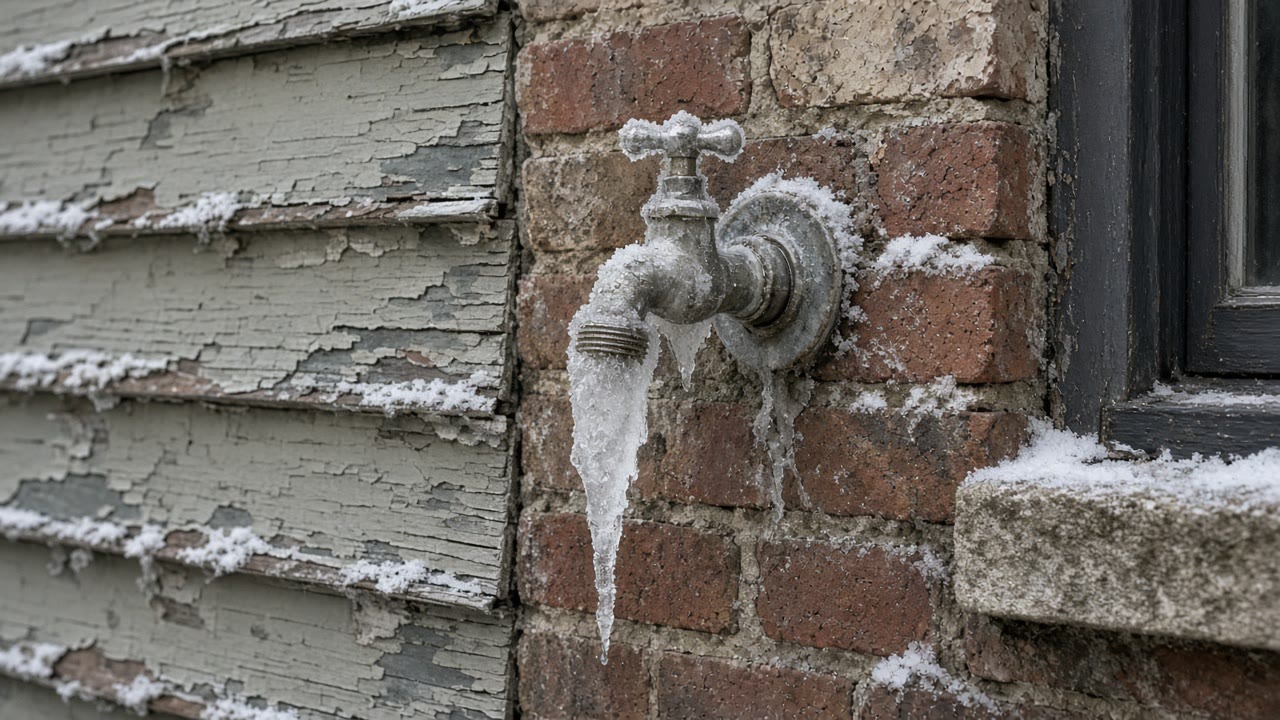
The valve feeding the fixture decides that, and you can test it yourself in a minute. A stop that closes cleanly keeps the job to the fixture. A stop that will not turn means isolating further back, and in a house of this age the next valve upstream may be no better. There is a useful local option before that becomes an emergency: OCWA owns only the meter and the remote reader at your property, all the plumbing and piping including the shutoff valves are yours, and the authority will shut the water off at the road by arrangement while a repair is done.
Test the stop before you buy the faucet
Turn the valve under the sink or behind the toilet and see whether it actually closes. That single test is the difference between a fixture visit and a job that has to isolate half the house, and it is worth knowing before anyone arrives.
Know where your two required valves are
OCWA's customer rules require two customer owned shutoffs, the first no more than 12 inches inside the building wall and the second on the outlet side of the meter. Finding and labeling the first one is an afternoon, and it is the valve that matters at two in the morning.
In kind work needs no permit, a change does
The county exempts a fixture replaced with one of the same flow rating, and names faucets, flush valves, supply tubes, fixture stops and toilet fill mechanisms. Shower valves usually cross that line, because reaching one means opening a wall and the new body rarely matches the old rough in.
Does the stop under your sink still close?
That answer decides whether this is a fixture visit or a bigger isolation job. Tell us what you found.
Other plumbing we arrange in the village
Fixture questions from East Syracuse homes
The shutoff under my sink will not budge. Who fixes that, me or the water authority?
It is yours, and OCWA answers this one directly: it owns only the water meter and the remote reader at a property, and all the plumbing and piping including the shutoff valves belong to the owner. The helpful part is what comes next. A customer getting ready to make a repair can call the OCWA office and have the water shut off at the road while the work is done, which means a seized stop in a 1930s village house does not have to become a flooded kitchen first.
Should I worry about lead in an old faucet?
It is worth knowing about rather than panicking over. In a village where more than half the housing was built in 1939 or earlier, fittings and solder predate the rules that limit lead content, and even today lead free means a weighted average of 0.25 percent across the wetted surfaces, not zero. Cleaning the aerator screens regularly and using cold water for drinking and cooking are the cheap habits. Replacing a very old faucet is an in kind job with no permit required, and it upgrades the fitting at the same time.
Tell us which fixture is misbehaving
A drip, a toilet that will not stop, or a valve that has seized solid. Describe it and there is no obligation either way.