
Finding a Hidden Leak in a Clay House Built After 1970
In the newest large housing market in this county, a hidden leak is usually a fitting rather than a length of corroded pipe.
Leak Detection quote in Clay
Share a few details so we can confirm coverage and arrange the right next step.
Would you rather talk it through? Call (315) 640-3590, answered 24/7.
$100 off your first job
Credited by us on your first booked job.
- One credit per customer per property, on your first booked job.
- Valid through December 31, 2026.
Mention this offer when you book. Full terms.
Where water escapes in a copper era Clay house
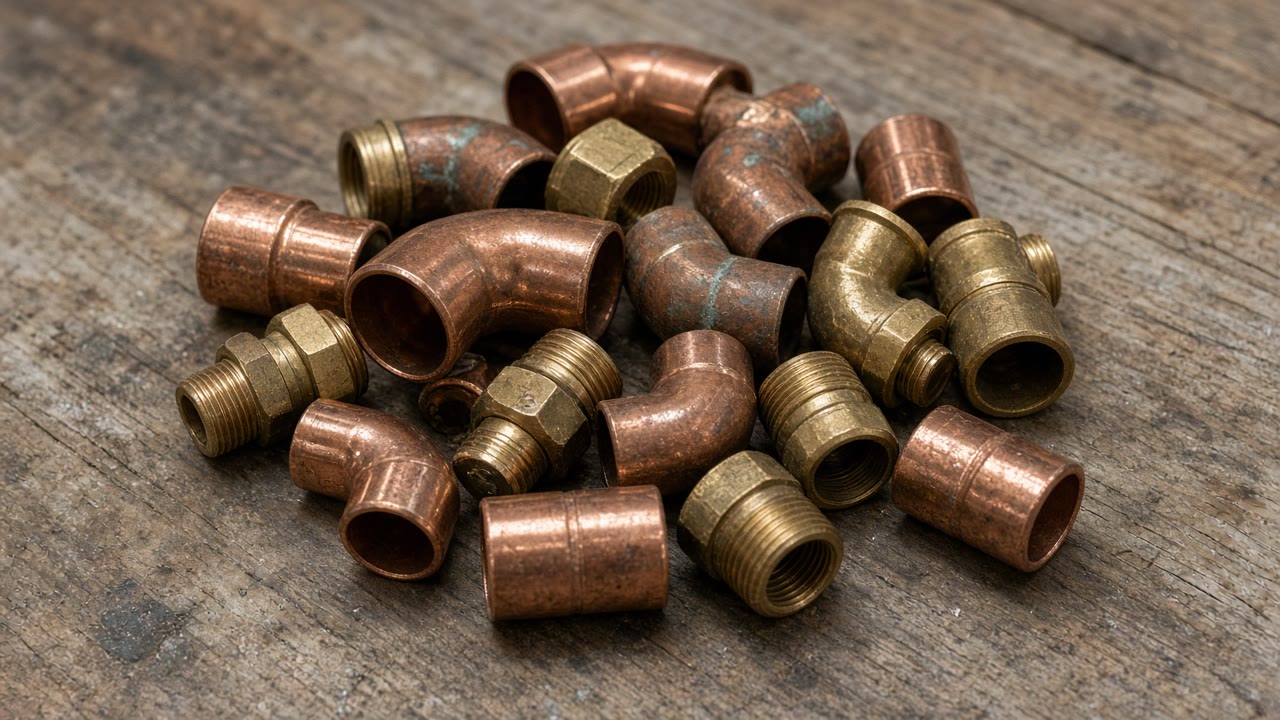
Only 3.2 percent of Clay's 26,282 homes were built in 1939 or earlier, the lowest pre 1940 share in the metro, and the median year of construction is 1978. That changes where to look first. In a house of that era the supply piping is generally copper or plastic rather than rusting steel, so a bill that jumped or damp with no visible source is far more likely to be a toilet flapper, a supply stop, a braided appliance line or a relief valve discharging than a pipe that has corroded through.
What leak detection involves

The order to check things in before anyone comes out
Close every fixture, read the meter, wait and read it again, because movement proves water is escaping downstream of the meter and no movement sends the search back to the street or to condensation. Then dye test the toilets: a few drops of food coloring in the tank, wait about 45 minutes, and color in the bowl means the toilet is emptying and refilling itself. Those two tests cost nothing, take under an afternoon, and between them they explain most Clay bills that jumped with nothing visibly wrong.
Rule out the yard before you rule out the house
Clay records 593 galvanized service lines requiring replacement, so a persistent wet patch in the front lawn is worth taking seriously even in a newer town. Where the leak is outside the foundation, the repair carries a county permit and nothing may be backfilled before Plumbing Control has inspected it.
A summer basement drip is often the season
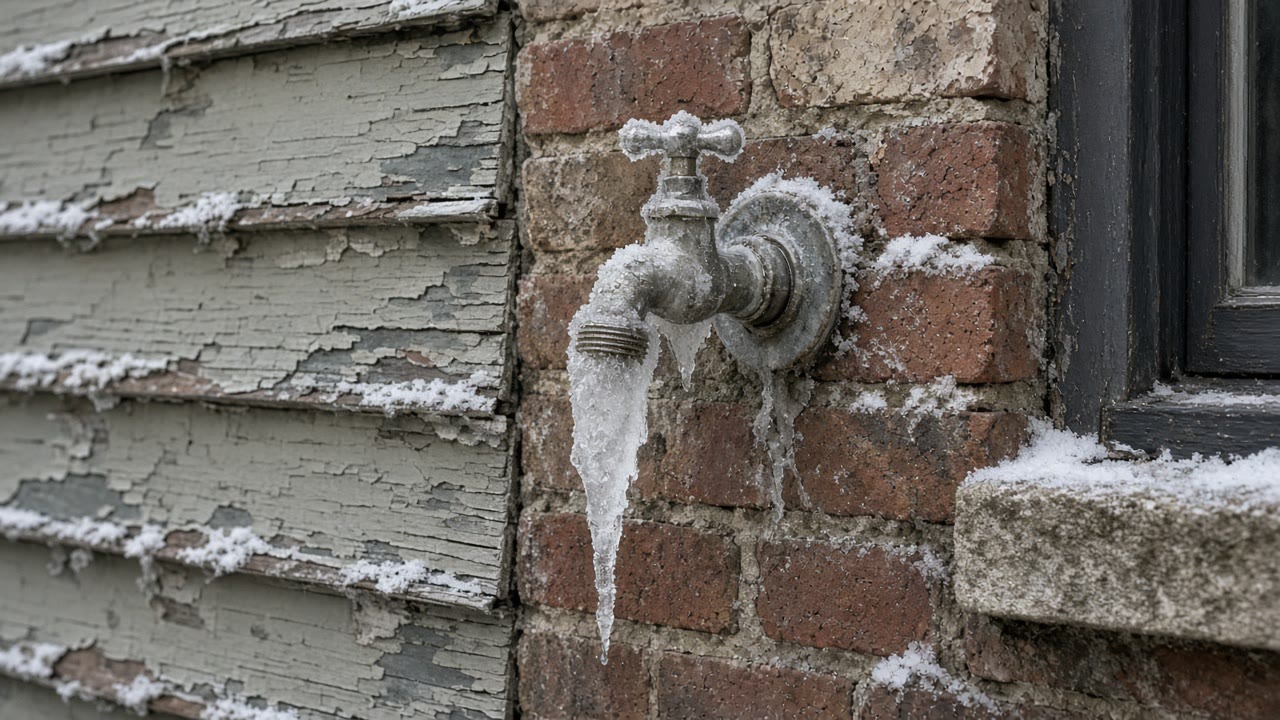
The mean July dew point here is 61.1 degrees and lake sourced water runs well below it, so any cold pipe pulls moisture out of ordinary summer air. Damp that appears in July and vanishes in October is condensation rather than a leak.
Know your indoor valves before winter
OCWA requires two customer owned shutoffs, the first no more than 12 inches inside the building wall. Finding and labeling that one is an afternoon, and it is the valve that decides how much damage a burst supply line does at three in the morning.
What a 1978 median means for where water escapes
American Community Survey 2020 to 2024 five year estimates give the town of Clay a median year of construction of 1978 across 26,282 housing units, the largest housing stock of any town in Onondaga County. Only 831 units, 3.2 percent, were built in 1939 or earlier, the lowest pre 1940 share in the metro, and 14,459, or 55.0 percent, were built before 1980. Within the town, the Radisson community has a median year of construction of 1990.
Source: US Census Bureau, accessed 2026-09-13
The New York State Lead Service Line Inventory records 13,573 service lines under the locality Town of Clay with zero confirmed lead service lines, 593 galvanized requiring replacement, 8,482 non lead and 4,498 unknown. In 585 of the 593 galvanized records the public side is already copper. A further 5,615 records under the locality CLAY are all classified non lead.
Source: New York State Department of Health, accessed 2026-09-13
OCWA's published method for finding a toilet leak is to lift the tank lid, place a few drops of food coloring into the tank water, wait about 45 minutes, and check the bowl: if the coloring shows up in the bowl the toilet is emptying and refilling itself and the flapper may need replacing. OCWA also lists waste of water through imperfect facilities, including a customer's failure to fix leaking pipes, as grounds on which it may discontinue service.
Source: Onondaga County Water Authority, accessed 2026-09-13
The NOAA 1991 to 2020 hourly climate normals for Syracuse Hancock International Airport give a mean July dew point of 61.1 degrees Fahrenheit, with the 90th percentile hourly dew point averaging 69.1 degrees in July and reaching 71.1 degrees. August averages 60.2 degrees. Syracuse's water is drawn from Skaneateles Lake, and OCWA's from Otisco Lake and Lake Ontario, all of which run well below those temperatures in summer.
Source: NOAA National Centers for Environmental Information, accessed 2026-09-13
OCWA Customer Rules section 4.5 requires the customer, at the customer's own expense, to install two shutoff valves: the first inside the building wall no further than 12 inches from that wall, and the second adjacent to and on the outlet side of the meter. Both must be of a make and type approved by the Authority. Section 5.4 adds that the customer is responsible for maintaining the plumbing and valves on both sides of the meter so the meter can be removed or replaced conveniently, and that if a leak develops after a meter is installed, removed or replaced because the plumbing was in poor condition, the customer pays for the repairs.
Source: Onondaga County Water Authority, accessed 2026-09-13
Onondaga County Plumbing Control states that plumbing permits must be obtained prior to any work except in an emergency, that in an emergency a permit must be obtained on the first business day following it, and that work cannot be covered, backfilled or concealed before an inspection is done by Plumbing Control. The county Requirements for Implementation, section 3.1.B, states the same rule for emergency repairs of sewers and water services.
Source: Onondaga County Department of Water Environment Protection, accessed 2026-09-13
Did the meter move with everything off?
Tell us what it did and we will tell you which check comes next.
Other plumbing we arrange for Clay homes
Leak questions from Clay homeowners
My water bill doubled and nothing looks wet anywhere. What now?
Two tests, in this order, and neither needs anyone to visit. Turn off every fixture, read the meter, wait fifteen minutes and read it again, because movement proves water is escaping between the meter and a tap. Then put a few drops of food coloring in each toilet tank, wait about 45 minutes and look in the bowl. Color in the bowl means the flapper is passing and the toilet has been refilling itself around the clock. In a town where the median house dates from 1978, that is the single commonest answer.
Could a leak in Clay be the service line rather than the house?
It can, and the tell is outside. A patch of lawn that stays green or soft while everything around it dries, or a dip in the driveway, points at the buried service. Clay has 593 service lines recorded as galvanized requiring replacement even though it has no confirmed lead ones, and galvanized fails eventually. If the wet ground is on the street side of the shutoff valve at the property line, that is the authority's pipe rather than yours, and establishing which side it is on costs nothing before anyone quotes an excavation.
Tell us where the water is going in your Clay house
A bill that jumped, damp with no source, or a soft patch in the lawn. No obligation either way.